
Position | Quarterback
Born | Wilmington, North Carolina
Date-of-Birth | August 23, 1934
Died | February 6, 2026 (age 91)
Height | 5’11”
Weight | 202 lbs
College | Duke
NFL Career | 18 seasons Teams | Philadelphia Eagles 1957-1963, Washington Redskins 1964-1974
Career Highlights
- Pro Football Hall of Fame inductee (1983)
- NFL 1960s All-Decade Team, alongside Johnny Unitas and Bart Starr
- NFL Champion with Philadelphia (1960)
- Led the NFL in passing yards five times
- Threw an NFL-record-tying 99-yard touchdown pass (1968, to Gerry Allen)
- Second all-time in Washington passing yards, trailing only Joe Theismann
- Second all-time in Washington passing touchdowns, trailing only Sammy Baugh
- Washington Redskins Ring of Fame
- Washington’s No. 9 retired (2022)
- Washington radio color commentator for 23 years (1981-2004) alongside Sam Huff and Frank Herzog, continuing on broadcasts through 2019
Awards
- 5x Pro Bowl (1961, 1964, 1966, 1967, 1969)
- 2x First-team All-Pro (1961, 1969)
- 2x Second-team All-Pro (1964, 1967)
- 2x NFL passing touchdowns leader (1961, 1967)
- NFL passer rating leader (1967)
- NFL completion percentage leader (1970)
Sonny Jurgensen Was the Voice of Washington Football for Six Decades
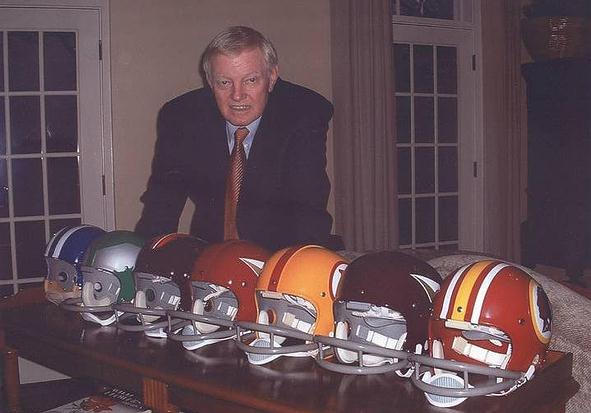
Sonny Jurgensen spent 54 years with the Washington franchise, first as its most electrifying quarterback, then as the voice generations of fans grew up trusting on Sunday afternoons. He died on February 6, 2026, at age 91, closing out one of the longest, richest relationships between a player and a fan base in NFL history.
A Golden Arm Out of Duke
Born in Wilmington, North Carolina, Jurgensen starred at Duke from 1954 to 1956, helping the Blue Devils to a pair of conference titles and a trip to the Orange Bowl. Philadelphia drafted him in the fourth round in 1957, and he won an NFL championship there in 1960 before Washington traded for him in 1964.
Undersized and famously out of football shape, Jurgensen didn’t look the part of a franchise quarterback. He played like one anyway. “All I ask of my blockers is 4 seconds,” he once said. “I beat people by throwing, not running.”
The Golden Years in Washington
Jurgensen’s arm turned Washington’s offense into appointment viewing, even during a stretch when the team rarely won. Paired with fellow future Hall of Famers Bobby Mitchell and Charley Taylor, he led the NFL in passing yards five times and set an NFL record with a 99-yard touchdown strike to Gerry Allen in 1968, a mark that still stands.
His most legendary performance came against Dallas in 1965: down 21-0 and getting booed by his own crowd, Jurgensen threw for 411 yards and three touchdowns to steal a 34-31 win. Afterward, he couldn’t resist a jab at the fans who’d doubted him. “I’m glad the crowd let me stay in,” he said.
He finished his Washington career second in franchise passing yards behind only Joe Theismann, and second in passing touchdowns behind only Sammy Baugh — remarkable company for a player who spent his prime on some genuinely bad Washington teams.
Sonny Being Sonny
Jurgensen’s arm was the stuff of legend inside the locker room, not just the box score. Teammates recalled him throwing off his back foot, sidearm, and — as a practice-field party trick — behind his back, just to show he could.
In 1967, he set a then-NFL record with 3,747 passing yards, doing it in the mud and grass of 1960s stadiums rather than the manicured turf quarterbacks throw on today.
Josh Harris put it plainly after Jurgensens death, calling it simply “one of the best arms the game has ever seen.”
The Character
Off the field, Sonny was every bit as unforgettable. He was famously allergic to curfews, training regimens, and coaches who tried to rein him in. He also never much bothered hiding it.
After one dust-up with coach Otto Graham, Jurgensen summed up their differences without missing a beat: “He likes candy bars and milkshakes, and I like women and scotch.”
It was that same unfiltered charm that made him such a natural fit in the broadcast booth years later — the arm made him a Hall of Famer, but the personality made him Sonny.
From the Huddle to the Booth
Jurgensen retired in 1974 and barely slowed down.
After six seasons calling national broadcasts for CBS, he joined Washington’s radio booth in 1981 alongside Hall of Fame linebacker Sam Huff and play-by-play man Frank Herzog. “Sonny, Sam and Frank” became appointment radio for 23 years, mixing sharp analysis with genuine, unscripted chemistry.
Jurgensen stayed in the booth in various capacities through 2019, giving him a run of over four decades as one of the most recognizable voices in Washington sports.
He never fully stepped back from the team, either. He mentored young quarterbacks like Gus Frerotte through position battles, and later became a fixture in owner Daniel Snyder’s inner circle, riding in on the owner’s helicopter and watching practices from a personal sideline spot.
A Legacy Washington Still Feels
Washington retired Jurgensen’s No. 9 in 2022, making him just the fourth player in franchise history to receive the honor.
When he died in 2026, tributes poured in from across the league.
Team owner Josh Harris called him “the embodiment of what it means to don the burgundy and gold,” a fitting description for a man whose voice, on and off the field, belonged to Washington for over half a century.

Career Statistics
| Team | Year | G | Att | Comp | Yds | %age | TD | Int | Rush |
|---|---|---|---|---|---|---|---|---|---|
| Philadelphia | 1957 | 10 | 70 | 33 | 470 | 53.6 | 5 | 8 | — |
| Philadelphia | 1958 | 12 | 22 | 12 | 259 | 77.7 | 0 | 1 | — |
| Philadelphia | 1959 | 12 | 5 | 3 | 27 | 114.2 | 1 | 0 | — |
| Philadelphia | 1960 | 12 | 44 | 24 | 486 | 122.0 | 5 | 1 | — |
| Philadelphia | 1961 | 14 | 416 | 235 | 3,723 | 88.1 | 32 | 24 | — |
| Philadelphia | 1962 | 14 | 366 | 196 | 3,261 | 74.3 | 22 | 26 | — |
| Philadelphia | 1963 | 9 | 184 | 99 | 1,413 | 69.4 | 11 | 13 | — |
| Washington | 1964 | 14 | 385 | 207 | 2,934 | 85.4 | 24 | 13 | — |
| Washington | 1965 | 13 | 356 | 190 | 2,367 | 69.6 | 15 | 16 | — |
| Washington | 1966 | 14 | 436 | 254 | 3,209 | 84.5 | 28 | 19 | — |
| Washington | 1967 | 14 | 508 | 288 | 3,747 | 87.3 | 31 | 16 | — |
| Washington | 1968 | 12 | 292 | 167 | 1,980 | 81.7 | 17 | 11 | — |
| Washington | 1969 | 14 | 442 | 274 | 3,102 | 85.4 | 22 | 15 | — |
| Washington | 1970 | 14 | 337 | 202 | 2,354 | 91.5 | 23 | 10 | — |
| Washington | 1971 | 5 | 28 | 16 | 170 | 45.2 | 0 | 2 | — |
| Washington | 1972 | 7 | 59 | 39 | 633 | 84.9 | 2 | 4 | — |
| Washington | 1973 | 14 | 145 | 87 | 904 | 77.5 | 6 | 5 | — |
| Washington | 1974 | 14 | 167 | 107 | 1,185 | 94.5 | 11 | 5 | — |
| Career Total | 18 seasons | 218 | 4,262 | 2,433 | 32,224 | 82.6 | 255 | 189 | 493 |
G = Games played, Att = Pass attempts, Comp = Completions, Yds = Passing yards, %age = Passer rating, TD = Passing touchdowns, Int = Interceptions, Rush = Rushing yards. Season-by-season rushing splits were not available in sourced records, so the Rush column reflects career total only in the final row. Stats via Wikipedia, sourced from Pro Football Reference.

Explore More Washington Team History
For more great Redskins and Commanders history, use the links in the right side bar, or go to the History Content Hub and choose your next history destination from there.