Welcome to The Hogs Content Hub
Here, we celebrate the heart and soul of one of the NFL’s most legendary offensive lines. The Hogs were more than just a line; they were the backbone of three championship winning offenses. From unforgettable quotes to in-depth articles, and player profiles, this hub is your gateway to reliving the Hogs’ glory days. Dive in and discover the stories, the moments, and the impact that made them a true symbol of greatness.
More Than a Line, a Legacy
Few offensive lines have left a mark on NFL history like Washington’s famed Hogs. Known for their power, toughness, and undeniable swagger, this legendary group redefined what it meant to dominate the trenches.
The Hogs got their name in the summer of 1982, when Offensive Line coach Joe Bugel rallied his burly blockers toward the practice sheds with a simple rallying cry: ‘Okay, you Hogs, let’s get running down there.’ The nickname took on a life of its own from there — razorback hog t-shirts were made, and wearing them became a weekly team tradition, enforced by a $5 fine payable to ‘Boss Hog’ Bugel’s Hog Feast fund.
But how did a nickname born in muck, become synonymous with greatness? The answer lies in the story of men who paved the way for one of football’s most iconic offenses.
The OG Hogs
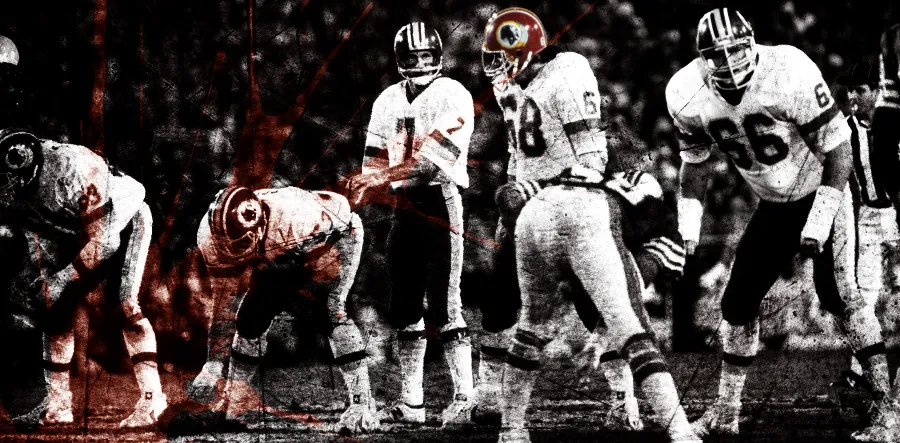
The Original Hogs were Jacoby, George Starke, Russ Grimm, Mark May and Jeff Bostic.
Don Warren was not originally a Hog but The Flying Dutchman became one. Fred Dean and Doc Walker were usually on scene as well.
John Riggins campaigned to be a Hog, as did Theismann.
“No quarterbacks,” said Head Hog Starke.
The Hogs loved Riggo though and he was admitted as an Honorary Hog. Bugel tossed Riggo a Hog tee one day, and he was in.
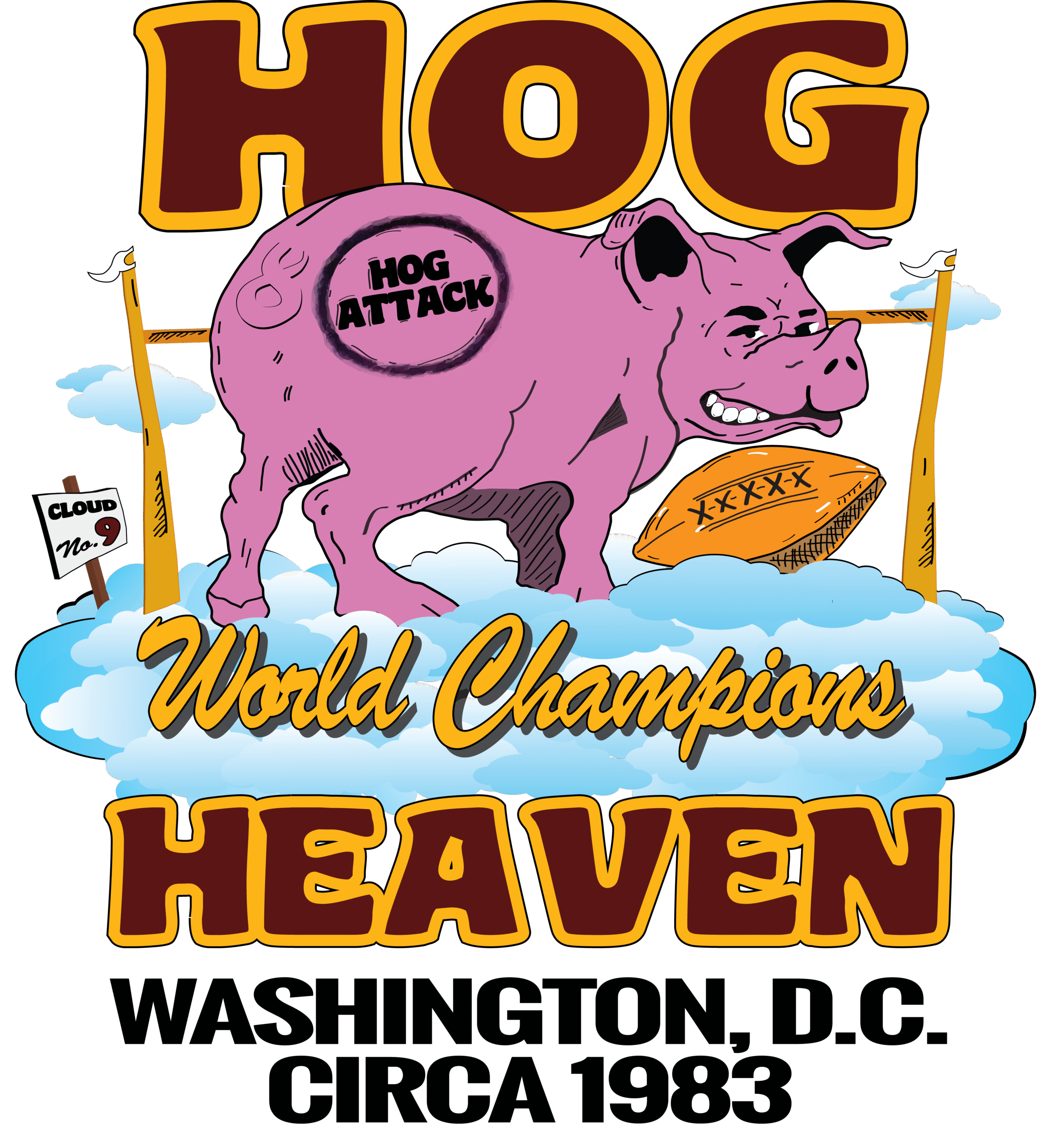
Read About The Hogs 5 O’Clock Club
Their bond deepened through the 5 O’Clock Club — a tradition dating back to Vince Lombardi’s 1969 tenure — where the group gathered after practice in a bare-bones tool shed at Redskin Park. No plumbing, no electricity — just a kerosene heater, Riggo’s warm cans of pork and beans, and plenty of cold beers to wash it all down.
“A lot of problems were solved out there,” Grimm once joked.
From training camp jests to Super Bowl glory, The Hogs became a symbol of unity, grit, and victory. Their dominance on the field was matched only by their bond off of it, forever changing the game and cementing their place in Washington’s rich football history.
Super Bowl Bound
The 1982 playoffs were where the Hogs truly announced themselves. Riggins carried the ball a combined 111 times for 491 yards across three postseason games — bulldozing through Minnesota, Dallas, and finally Miami in Super Bowl XVII — but it was the Hogs up front who made it all possible. Game after game, they controlled the line of scrimmage and gave Joe Gibbs the clock-eating, ball-control offense that ultimately delivered Washington a shot it it all.
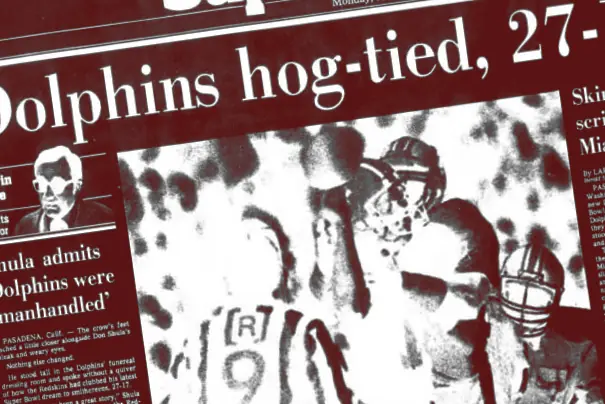
Then against the Miami Dolphins in Super Bowl XVII, The Hogs were instrumental in the most famous play in Washington history.
70 Chip
It was fourth and one to go – on the Miami 43 yard line – fourth quarter and the game in the balance.
Goal line, goal line. I-left, tight wing, 70 Chip on white.
On the game’s pivotal play, Theismann handed off to Riggins behind a gaping hole opened by Jacoby, Grimm, and H-back Otis Wonsley. The Diesel burst through and never looked back — shrugging off cornerback Don McNeal in a moment forever etched in Washington football lore.
The Hogs Offensive Line Evolves
The years between Super Bowls brought change to the Hogs’ roster. Starke retired in 1985 training camp, leaving on his own terms after helping build something historic. As he reflected, the experience of being the best in the world made everything else in his career pale by comparison. Riggins followed at season’s end, later earning his rightful place in the Pro Football Hall of Fame in 1992. Theismann’s career ended on the gruesome broken leg injury suffered against the Giants in 1985 too.
But the Hogs adapted. Washington found Raleigh McKenzie in the 11th round of the 1985 draft — the 290th pick overall — and he quietly became one of the most versatile linemen in franchise history. By 1987, McKenzie had locked down a starting guard spot alongside Jacoby, Grimm, Bostic, and May, who had stepped into Starke’s role at right tackle. Together, they steamrolled their way to Super Bowl XXII.
Second Lombardi
The Hogs made Doug Williams’ MVP outing and Timmy Smith’s record-shattering 204-yard rushing game possible, anchoring an offense that piled up a staggering 602 total yards — nearly double Denver’s output. A historic second quarter, known simply as ‘The Quarter,’ sealed Washington’s dominance, and the team broke its own Super Bowl rushing record in the process. For the four remaining original Hogs, it was their second championship ring in six seasons.
Hogs V 2.0
The second generation of Hogs was built through one blockbuster move and one quietly brilliant draft pick.
The blockbuster came on opening day of the 1988 season, when Washington sent backup quarterback Jay Schroeder to the Los Angeles Raiders for Pro Bowl left tackle Jim Lachey — widely considered one of the best trades in franchise history. Lachey had just come off a Pro Bowl season and quickly established himself as one of the premier left tackles in the game, his arrival even nudging Joe Jacoby — after 105 starts at left tackle — to the right side. To his credit, Jacoby made the switch without complaint.
The quieter addition came in the 1989 draft, when Washington used the 263rd overall pick on Mark Schlereth, a powerful guard out of the University of Idaho. Few expected a tenth-round pick to amount to much, but Schlereth went on to carve out a 12-season NFL career and win three Super Bowls — one with Washington and two more with Denver.
Together, Lachey and Schlereth slotted into a line that already featured Jacoby, Grimm, Bostic, and McKenzie, restoring the Hogs to their status as one of the most dominant offensive lines in football. The one bittersweet note was Mark May, whose significant knee injury in 1989 cost him the entire 1990 season. Washington ultimately left him unprotected, and he left under Plan B free agency in early 1991.
Seven Sacks In A Season?
The Hogs v2.0 may have put together the greatest season any offensive line has ever had. The numbers are staggering: in 1991, Washington’s starting unit allowed just seven sacks on the entire season — playoffs included. The official team total was nine, but the final two came in garbage time in the last game, with the starters already on the bench.
The result was a Mark Rypien who looked virtually untouchable, launching deep ball after deep ball from the comfort of one of the most impenetrable pockets in NFL history. They walked to the Super Bowl.
Lombardi Number Three
The line that took the field for Super Bowl XXVI, left to right, was Lachey, McKenzie, Bostic, Schlereth, and Jacoby — with Grimm largely sidelined by injury. They had one more championship to win.
Even before kickoff, a broadcaster noted after interviewing Lachey that it was the offensive linemen — not the defenders — who seemed locked in and ready. They backed it up, dismantling the Bills and their highly touted defensive line 37-24.
Rypien spent the afternoon in the same luxury the Hogs had always provided — time, space, and a clean jersey — finishing with 292 yards, two touchdowns, and the Super Bowl MVP award. Lachey and Schlereth earned their first rings; Bostic, Grimm, and Jacoby their third.
The Original Hogs
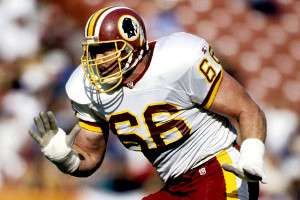
Joe Jacoby
Left Tackle (1981–1993)
Arguably the best undrafted NFL player ever, he was the anchor of the Hogs for over a decade.
VIEW PROFILE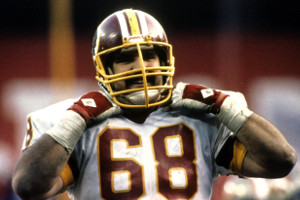
Russ Grimm
Left Guard (1981–1991)
The only Hog inducted into the Hall of Fame (2010), Grimm logged 140 games in a Redskin uniform.
VIEW PROFILE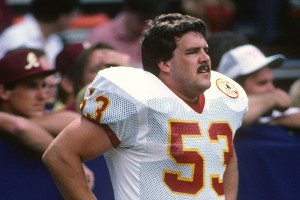
Jeff Bostic
Center (1980–1993)
An undrafted free agent out of Clemson, Bostic played all 14 years of his NFL career with the Redskins.
VIEW PROFILE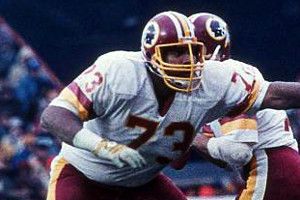
Mark May
Right Guard (1981–1990)
Drafted in the 1st round in 1981 (20th overall), May won Super Bowls in ’82 and ’87 with Washington.
VIEW PROFILE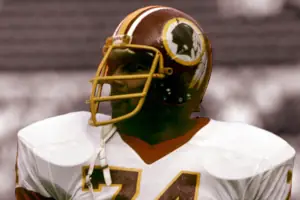
George Starke
Right Tackle (1972–1983)
The ‘senior’ member of the group, and subsequent Head Hog, Starke was a steadying influence.
VIEW PROFILE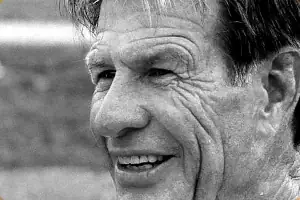
Joe Bugel
OL Coach (1981–1990)
The man who founded, taught, inspired and was responsible for the Hogs and their dominance.
VIEW PROFILEThe Hogs V2.0
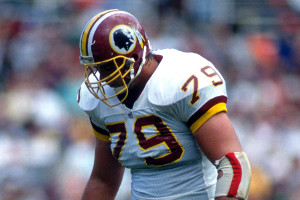
Jim Lachey
Left Tackle (1988–1995)
Acquired from the Raiders in 1988 for Jay Schroeder, Lachey’s injuries are all that kept him from the HOF.
VIEW PROFILE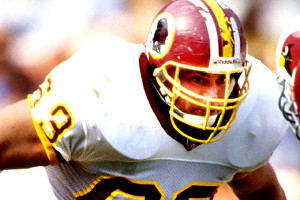
Mark Schlereth
Right Guard (1989–1994)
Schlereth holds the distinction of being one of the most operated on players in NFL history.
VIEW PROFILE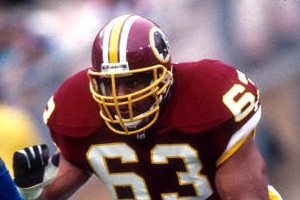
Raleigh McKenzie
Left Guard (1985–1994)
McKenzie personified diversity and played every single position on the offensive line at some point.
VIEW PROFILEMore Hogs Profiles
Doc Walker | Don Warren | Fred Dean | Ray Brown
The Hogs: A Heritage in Words
They didn’t just dominate the line of scrimmage—they defined an era with their words. From locker room banter to iconic soundbites, the bold quotes reflect their unmatched grit, loyalty, and no-nonsense approach to football. These weren’t just players; they were a brotherhood that bulldozed through defenses and protected Super Bowl glory, all while leaving a trail of unforgettable moments.
Dive into a collection of the boldest, funniest, and most legendary Hogs quotes from a group that truly owned the trenches. Some of these were made by The Hogs, some were made about The Hogs.
Enjoy!
Jeff Bostic
… on running the 50-gut NINE STRAIGHT times against the Cowboys
After three or four, in the huddle I said to Russ, ‘Play along with me.’
I got to the line, and I said to Randy White, ‘Our coaching staff loves you. We’re going to run it over you again.’
Then on the next play Russ told him.
Randy wasn’t very happy, but after three or four times, he didn’t say a word.
Don Warren
… on the congeniality of The Hogs
Russ Grimm would swallow his dip by halftime and throw up on somebody’s shoes.
Jeff Bostic and Mark May were fighting about who’d missed an assignment.
And man did Riggo stink from his hangover. But we got it done.
Joe Jacoby
… on a locker room conversation with John Riggins
Riggins: “Ah, the old man is mad at me. I’m asking you to do a little more for me. I need gaping holes.”
JJ: He gets halfway across the room and then walks back.
Riggins: “On second thought, on those gaping holes, don’t make them gaping. Just big enough to get five or six yards. I don’t want to get 10 or 15 yards downfield and make a fool of myself falling down.”
JJ: That was John, and then he goes out and gets 185 yards.
Matt Millen
… on Russ Grimm saying he would run over his own mother to get to the Super Bowl
“I’d run over Russ Grimm’s mother to get to the Super Bowl too.”
Dive Into The Tradition
Explore the articles that tell the many stories of an offensive line that wasn’t just dominant, but legendary. From their rise to glory to their enduring impact, these written pieces capture the heart of what made this motley crew great.
Articles about The Hogs from the Washington Post, the New York Times, The Columbus Times Dispatch, The Chicago Sun and more!