Role | Founder & Owner
Born | October 11, 1896, Grafton, West Virginia
Died | August 9, 1969 (age 72), Washington, D.C.
College | Randolph-Macon College (did not graduate)
Ownership Tenure | 1932–1969 (Boston Braves/Redskins, Washington Redskins)
Pro Football Hall of Fame | Inducted 1963 (inaugural class)
Career Highlights
- Founded the franchise in 1932 as the Boston Braves
- Renamed the team the Redskins in 1933
- Relocated the franchise to Washington, D.C. in 1937
- Won NFL Championships in 1937 and 1942
- Helped split the NFL into two divisions with a title game (1933)
- Co-authored rule changes that opened up the forward pass
- Introduced the NFL’s first marching band and halftime pageantry
- Built the first NFL radio/TV network broadcasting across the South
- Inducted into the Pro Football Hall of Fame’s inaugural class (1963)
- Last NFL owner to integrate Black players onto his roster (1962)
Honors (Later Removed by the Franchise)
- Name removed from the team’s Ring of Fame (2020)
- Statue removed from RFK Stadium grounds (2020)
- Name removed from all official team materials and history walls (2020)
- Lower bowl of FedEx Field, previously named for Marshall, renamed for Bobby Mitchell (2020)
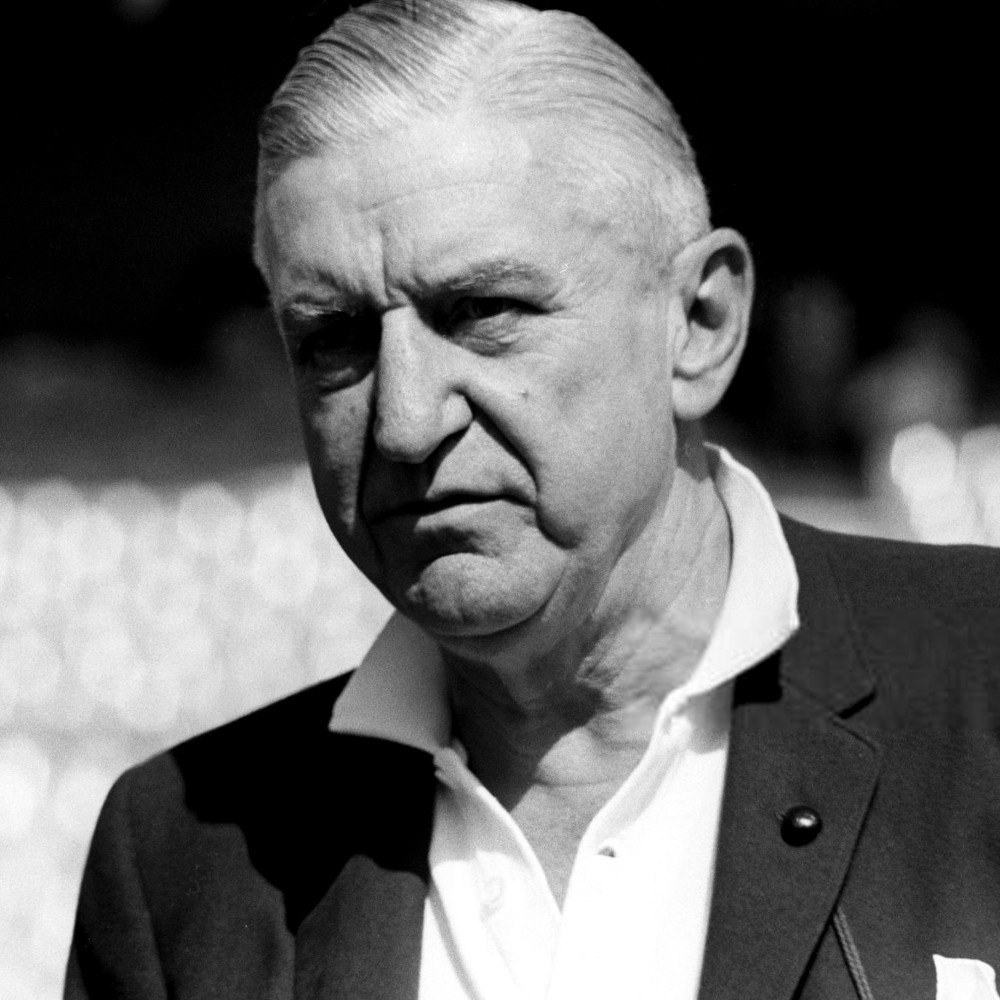
George Preston Marshall: The Complicated Founding Father of Washington Football
George Preston Marshall built the franchise that became the Washington Commanders. He also held it back from integrating for three decades longer than every other team in the league. Both facts are part of his story, and neither cancels out the other.
From Laundry Chain to NFL Owner
Marshall was born October 11, 1896, in Grafton, West Virginia, and grew up largely in Washington, D.C., where his father ran a laundry business. Marshall took over and expanded that business into a chain before turning his attention to professional sports.
In 1932, he and three partners paid the NFL a franchise fee and were awarded a team in Boston. They played their first season as the Boston Braves.
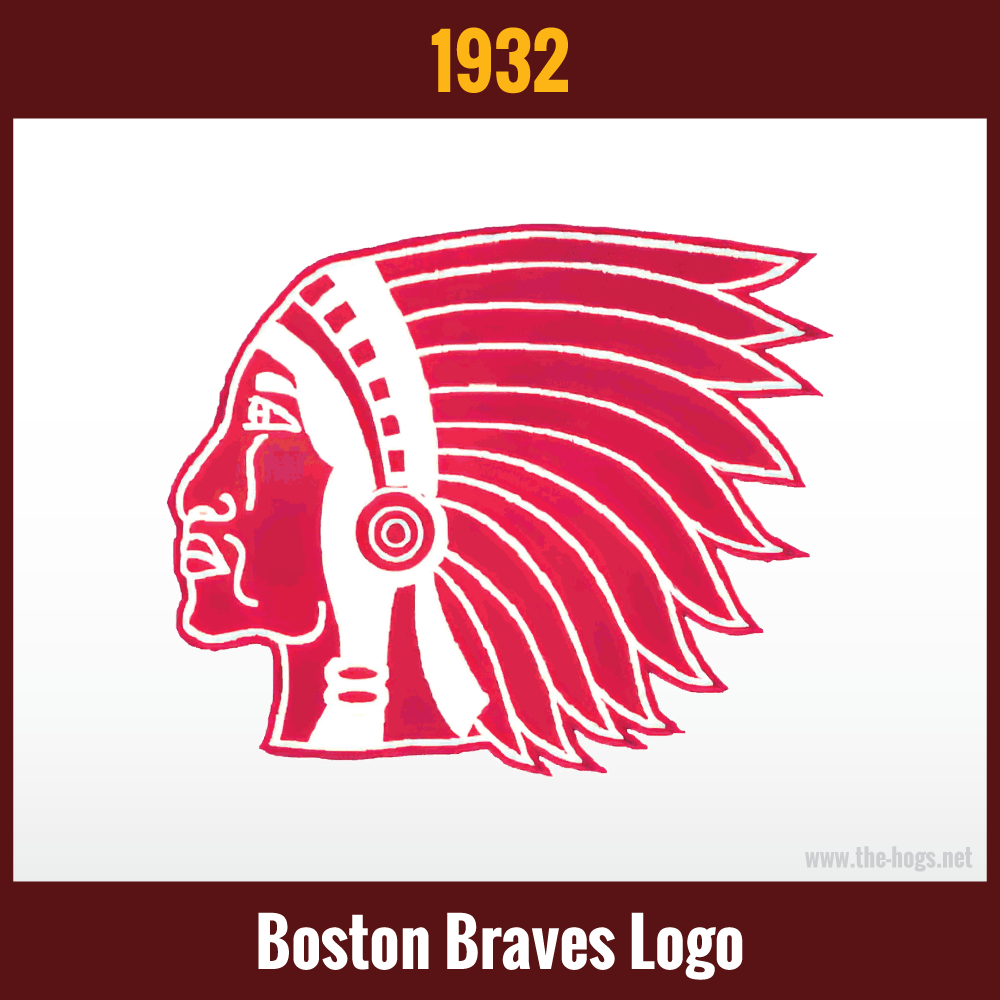
His partners bailed out immediately, when the team lost money in its debut season. That put Marshall in full control. In 1933, he moved the team to Fenway Park and renamed them the Redskins. In 1937, after lukewarm support in Boston despite a division title, Marshall relocated the franchise to Washington, where it has played ever since.
Building a Franchise, and the NFL Along With It
Marshall wasn’t primarily a football strategist — he was a showman. He organized the league’s first marching band, introduced cheerleaders, and staged elaborate halftime pageantry years before it became standard across professional sports. He was a maverick.
GPM commissioned “Hail to the Redskins” as the team’s fight song in 1938, a tradition that outlasted his ownership by decades.
Beyond showmanship, Marshall pushed rule changes that shaped the modern game, including opening up the forward pass and splitting the NFL into divisions with a championship game.
In the 1950s he built the first network broadcasting NFL games across the South, well before television was standard across the league.
His Washington teams won NFL titles in 1937 and 1942,
The Last Team to Integrate
Marshall’s blight?
Washington teams fielded no Black players for the franchise’s first 25 years, part of a broader unwritten agreement among NFL owners that effectively barred Black players from the league between 1934 and 1946. By the early 1960s, every other NFL franchise had integrated. Marshall’s had not.
According to sports historian Thomas G. Smith, when asked about the holdout, Marshall was blunt: “We’ll start signing Negroes,” he said, “when the Harlem Globetrotters start signing whites.”
The standoff ended due to direct government pressure. Washington’s stadium sat on federal land, and in 1961 Interior Secretary Stewart Udall told Marshall the team would lose its lease unless it integrated. Facing that ultimatum, Washington drafted Ernie Davis in 1962, then traded his rights to Cleveland for Bobby Mitchell after Davis refused to play for Marshall. Mitchell became the franchise’s first Black player that season and went on to a Hall of Fame career.
A Legacy Reconsidered
Marshall suffered a debilitating stroke in 1963, the same year he entered the Pro Football Hall of Fame’s inaugural class. He died in 1969. His will directed funds toward a charitable foundation with an explicit restriction: it would not support any effort promoting racial integration.
For decades, Marshall’s name remained fixed to the franchise’s history — a stadium seating bowl, the team’s Ring of Fame, a statue outside RFK Stadium. That began changing in 2020. Washington removed his name from team materials and the Ring of Fame, renamed the FedEx Field lower bowl for Bobby Mitchell, and the city removed his statue from RFK Stadium grounds entirely. The franchise erased most evidence of the man who had started it all.
Not only was he the man who founded the team, his showmanship shaped how professional football is presented to this day.
His resistance to integration shaped who got to play it, for far longer than it should have.
Washington’s football origin story includes both.

Explore More Washington Team History
For more great Redskins and Commanders history, use the links in the right side bar, or go to the History Content Hub and choose your next history destination from there.