Football is a game of strategy, athleticism, and teamwork. While the focus is often on flashy quarterbacks and speedy wide receivers, it is often the offensive line that lays the foundation for a team’s success. Few units in NFL history have embodied this principle better than The Hogs – the legendary offensive line of the Washington Redskins.
Their greatness may be lost on some of the new Washington fans who did not get to experience them in their glory. Let’s explore the history of this iconic group of linemen, as well as the origins of their famous nickname, who it included, and their everlasting legacy to the franchise.
I. Who are The Hogs?
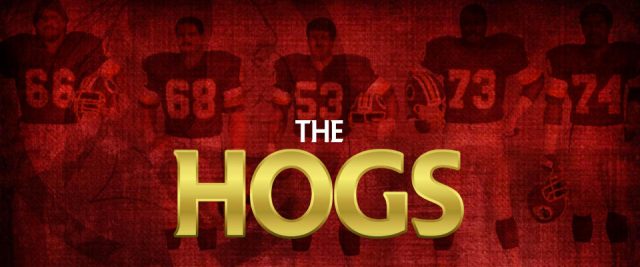
The Hogs were the offensive line of the Washington Redskins during the 1980s and early 1990s. This group of linemen played an integral role in the team’s success during that era, helping the Redskins win three Super Bowl championships. Make no mistake about it – without them, there might not have been any Super Bowl rings.
They were big. They were bulky. They were hog-like.
They were also known for their exceptional teamwork and ability to work together as a cohesive unit.
And that helped them become arguably the best offensive line in NFL history.
II. 1981 Was A Vintage Year For Linemen
The offensive line would not be called The Hogs until 1982, but it was definitely the 1981 NFL Draft that made it all possible.
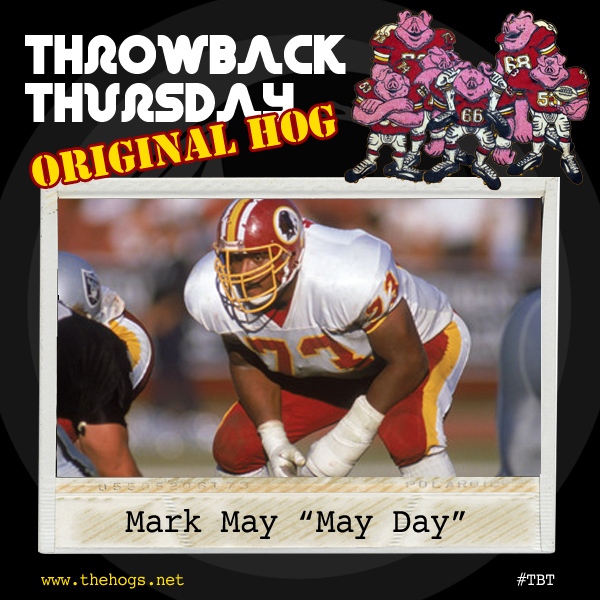
First, Washington selected Mark May with the 20th overall pick in the first round of the draft. He had been a standout at Pitt and had not allowed a single sack in his last two seasons.
Then, the Redskins made a bold move in the third round of the draft so that they could take Russ Grimm with the 69th overall pick. They gave up their first round pick in the following year’s draft to do so.
Without getting off-topic, not only was the 1981 Draft the best draft in franchise history, it was one of the best drafts in NFL History. Ok, that is getting off-topic.
The final piece of the puzzle – the biggest piece – wasn’t even drafted. Washington signed Joe Jacoby as an undrafted free agent out of Louisville. There’s a nearly legendary tale about how Jacoby only got the tryout because Head Coach Joe Gibbs thought he was a defensive lineman. Offensive line coach Joe Bugel did not correct the error, wanting to get Jacoby a shot at making the team. There were already 18 offensive lineman for training camp that year, including the first round pick May to man the tackle position.
III. Why were they called The Hogs?
The nickname The Hogs was originally coined by Boss Hog Bugel in the early 1980s; however, there are a couple of versions of how the name actually came to pass.
One version says that it all started one day at practice at the Redskins 1982 training camp. Bugel was working with his line – a chunky bunch – and wanting them to hit the blocking sleds, he said:
“Okay, you Hogs, let’s get running down there.”
Another version, came from Starke who upon Grimm being inducted into the Hall of Fame said the following:
“Obviously, everyone knows that Russ is a Hog, but not everyone knows that the name Hogs came from a description of him. He was lying on the ground at the end of a blocking drill and Joe Bugel walked by and Russ had his stomach peeking out of his shirt. Buges said, ‘Man, Russ get up you look like a Hog laying on the ground.’ “
What isn’t disputed is that the linemen embraced the monicker immediately. They even had t-shirts made up to suit the new nickname.
The name stuck, and soon the entire offensive line, and everybody else, were referring to them as The Hogs.
The nickname was fitting for the offensive linemen, who embodied the tough, gritty, and hard-working spirit of the Redskins franchise. The linemen were known for their blue-collar work ethic, and they took pride in doing the dirty work that allowed the team’s skill position players to shine. The nickname also reflected the physical nature of the linemen’s play, as they were not afraid to get down and dirty in the trenches.
IV. The Original Hogs
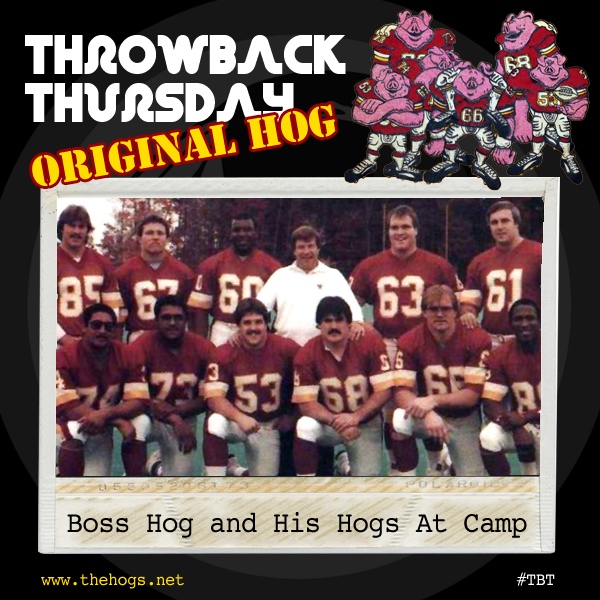
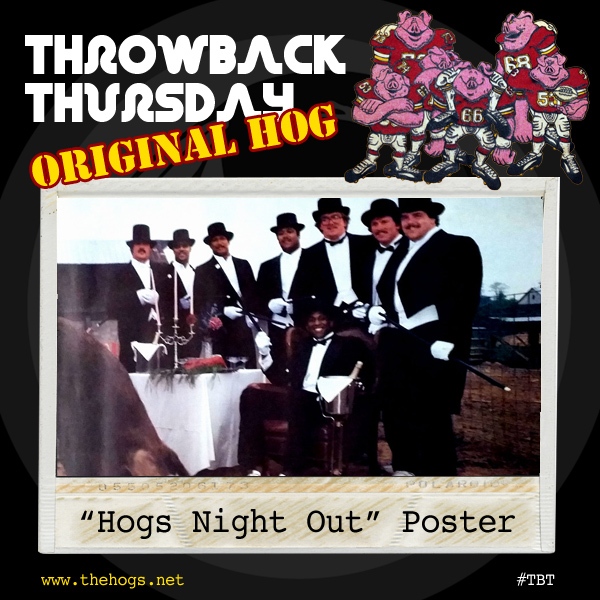
The key players of the original Hogs included Jacoby at left tackle, Grimm at left guard, Jeff Bostic, at center, May at right guard, and George Starke at right tackle.
Collectively, these players formed one of the most dominant offensive lines the league had ever seen.
The original group also included tight ends Doc Walker and Don Warren, as well as reserve guard / tackle Fred Dean.
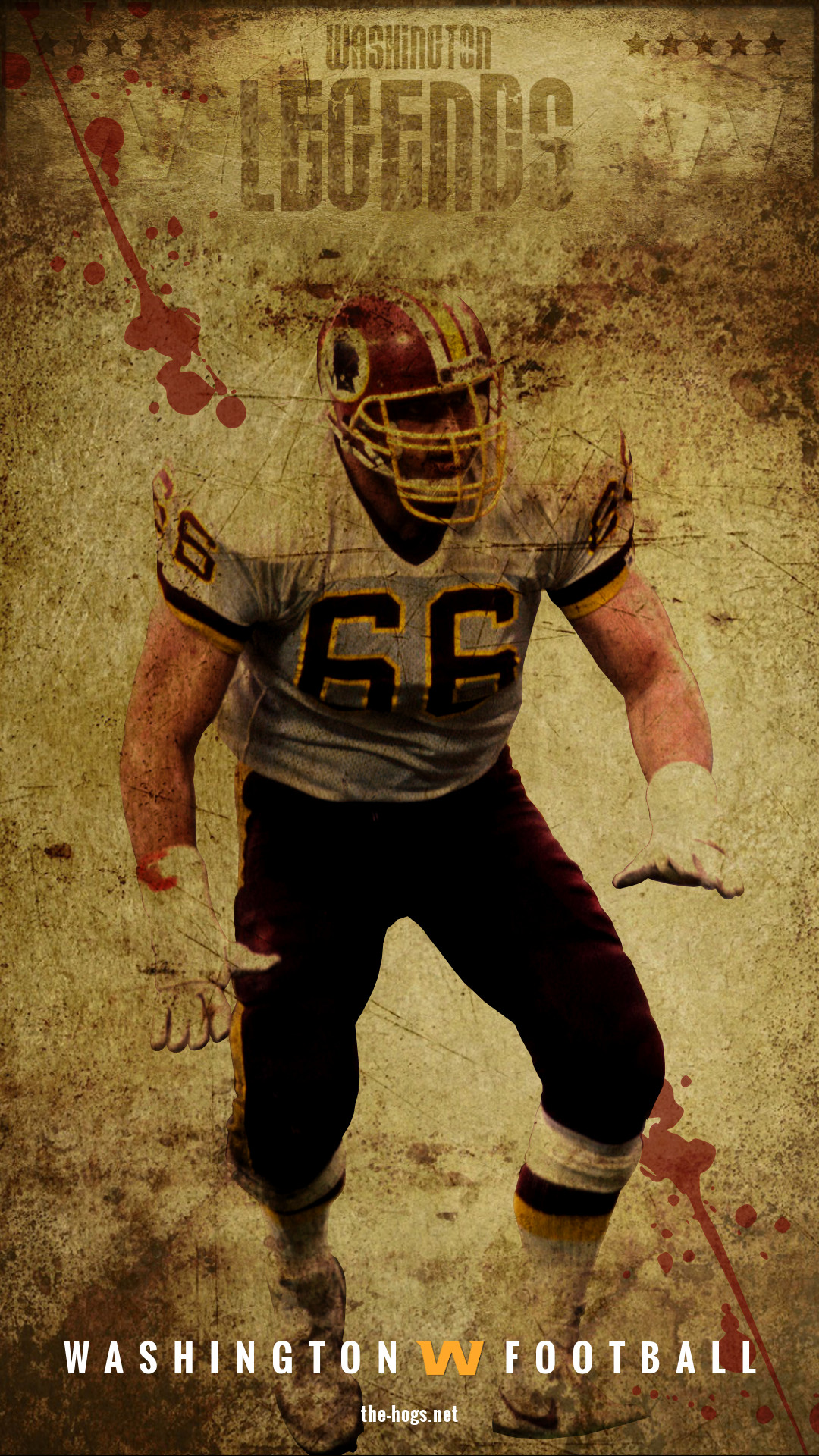
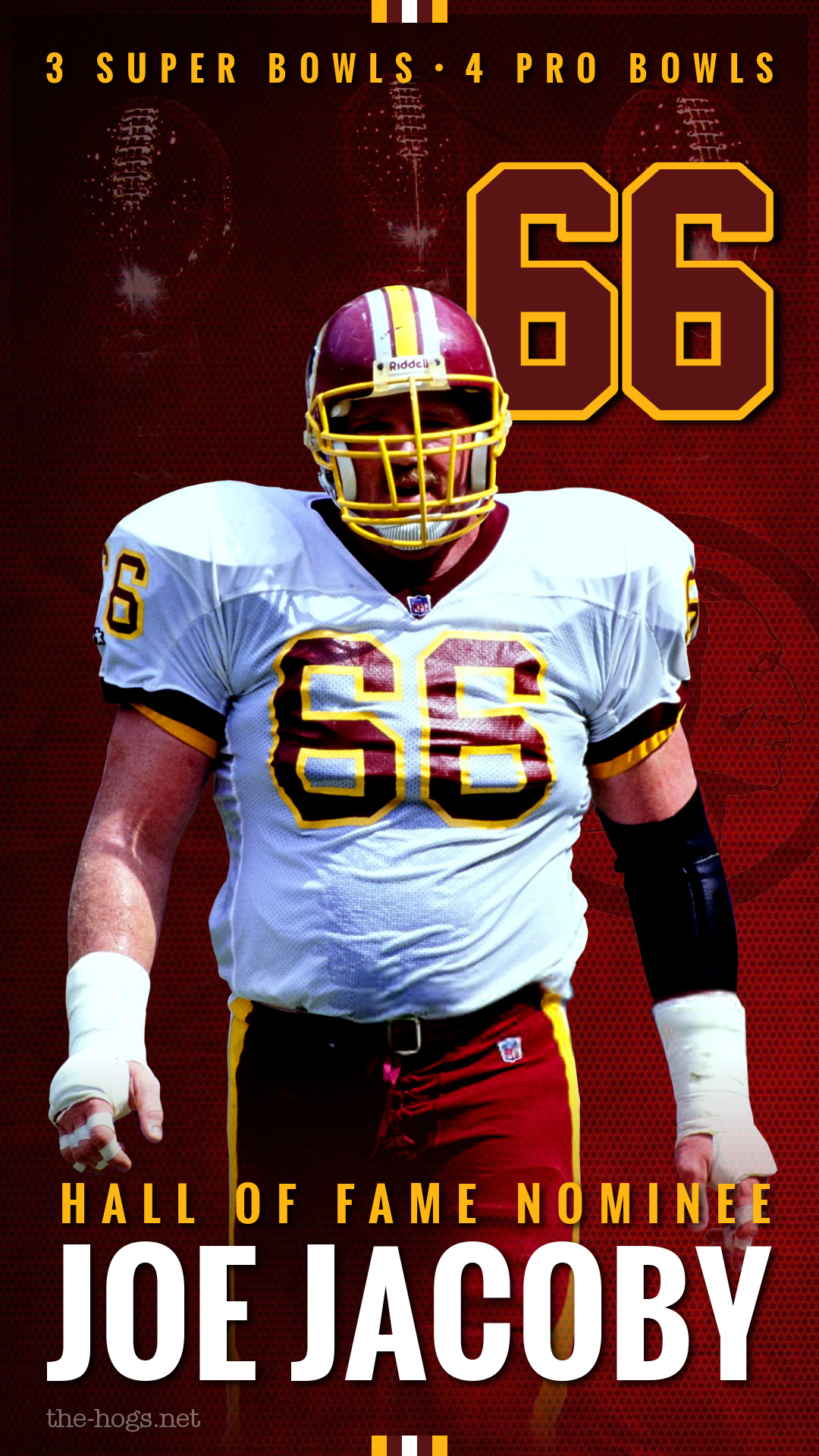
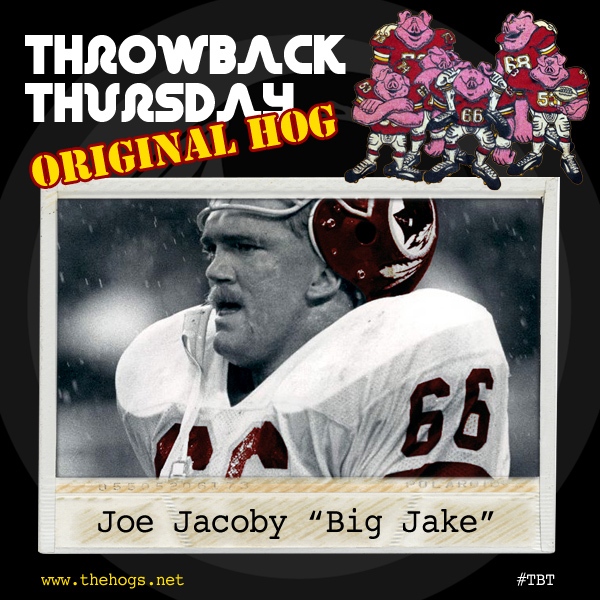
Jacoby played for the Redskins for his entire career from 1981 to 1993, and played both tackle positions as well as a season at guard. He earned four Pro Bowl selections and won three Super Bowls.
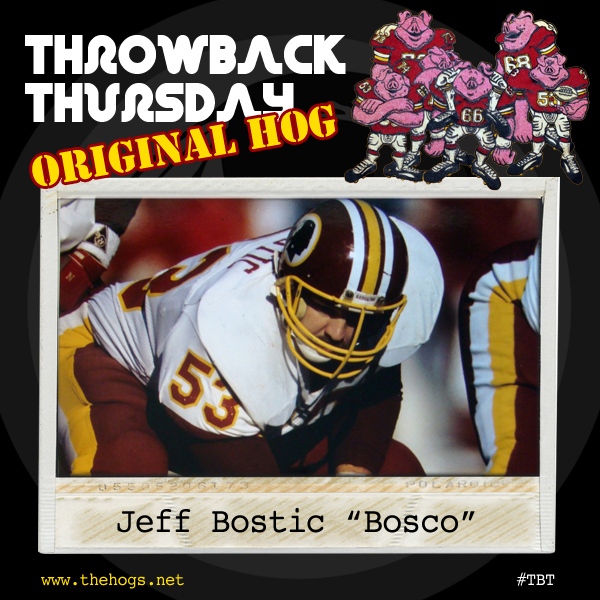
Bostic was the team’s center from 1980 to 1993, and played a crucial role in the success of the offensive line by making the line calls and coordinating the blocking assignments. He went to the Pro Bowl and also won three Super Bowls.
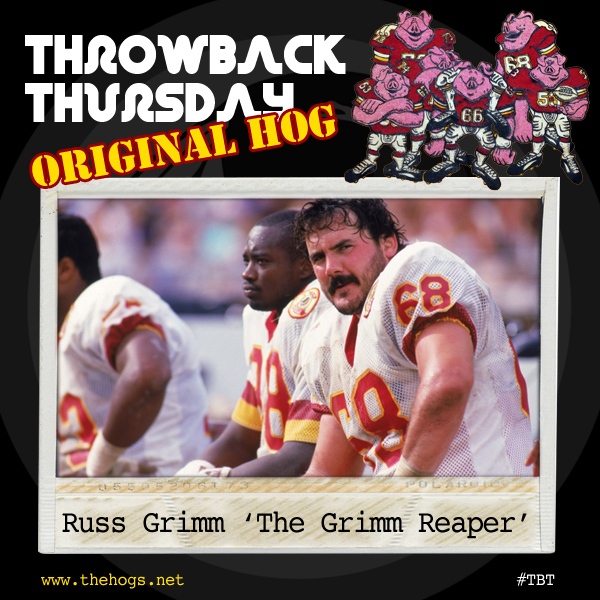
Grimm, who played almost exclusively at left guard for the Redskins from 1981 to 1991, was a four-time Pro Bowler, a three-time All-Pro and a three time Super Bowl champion as well. He was known for his aggressive and physical style of play, and was inducted into the Hall of Fame with the class of 2010.
Extra! Extra!
John Riggins petitioned the group to be let in as an honorary member. They gave him a Hogs t-shirt and he was in.
Joe Theismann tried the same tactic.
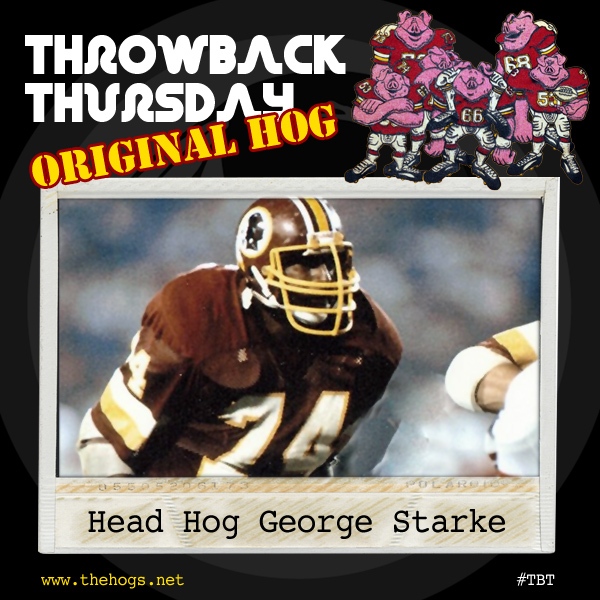
“No quarterbacks,” he was told by Head Hog Starke.
Throughout the 1980’s, there were changes to the personnel and ultimately by 1991, it had become what many think of as The Hogs V2. That unit was responsible for quarterback Mark Rypien being sacked just seven times in an entire season en route to a Super Bowl XXVI victory. But that’s a story for another day.
Author’s Note: All of the above links will take you to more in-depth Profile pages on each of the individual members of The Hogs. There you can read a bit more about each player and what made them a valued member of the unit. You can also read about members of the V2 squad that included the great Jim Lachey, Mark Schlereth and Raleigh McKenzie in the Hogs History section.
V. How Big Were The Hogs?
The Hogs offensive linemen were known for their size and physicality, which helped them dominate opponents on the field.
For example, Jacoby was the team’s left tackle, and stood at 6’7″ and weighed over 300 pounds. That’s a man mountain anyway, but at the time, it was monstrous. Russ Grimm, was 6’3″ and 273 pounds and Jeff Bostic was 6’2″ and 260 pounds. Mark May and George Starke, were similarly sized.
While the linemen varied in size and weight, they were generally much larger than their counterparts in the league at the time.
They were also considerably larger than the defensive linemen who had to try and guard them. Subsequently, the defensive lines had to adjust and use bigger, stronger players to try and guard against such mismatches.
Granted, by comparison, offensive linemen in the NFL today are generally bigger and heavier than The Hogs were. The average weight of an offensive lineman in the league today, is around 315 pounds. Many-to-most of the players are also taller than The Hogs were.
What you have to remember is that The Hogs are the reason for it being that way.
They changed the game.
The Hogs were able to use their strength and physicality to dominate opponents on the field.
VI. Conclusion – The Legacy
In conclusion, The Hogs offensive line was one of the most dominant units in NFL history, and remains an iconic part of the Washington Redskins franchise. Given the origins of their nickname, the physical characteristics of these linemen, and the key players that made up this legendary group – hopefully they will continue to go on in infamy.
The nickname became synonymous with the success of the Redskins’ franchise. Fans began wearing pig snouts to games and chanting “Hog! Hog! Hog!” to show their support for the linemen.
The name even inspired the infamous and venerable Hogettes, the group of male Redskins fans who dressed up in pig costumes and cheered on the team from the stands.
The Hogs not only revolutionized the way offensive lines were perceived in the NFL, they changed the game itself. Forever.
They also helped define the tough and gritty spirit of the Redskins franchise at the time. Their legacy lives on today in the memories of fans and the stories that have been passed down through the years.
Author’s note:
We encourage readers to explore the resources available on our website, including our in-depth history of The Hogs, the various profile pages on each member, the collection of Hogs articles and all of the other materials related to the group that you will find in the separate Hogs Section. By learning more about this iconic unit and its history, you can gain a greater appreciation for the history of this franchise and some of the athletes who have made it great.
Hogs Gallery
The Hogs Mobile Wallpapers
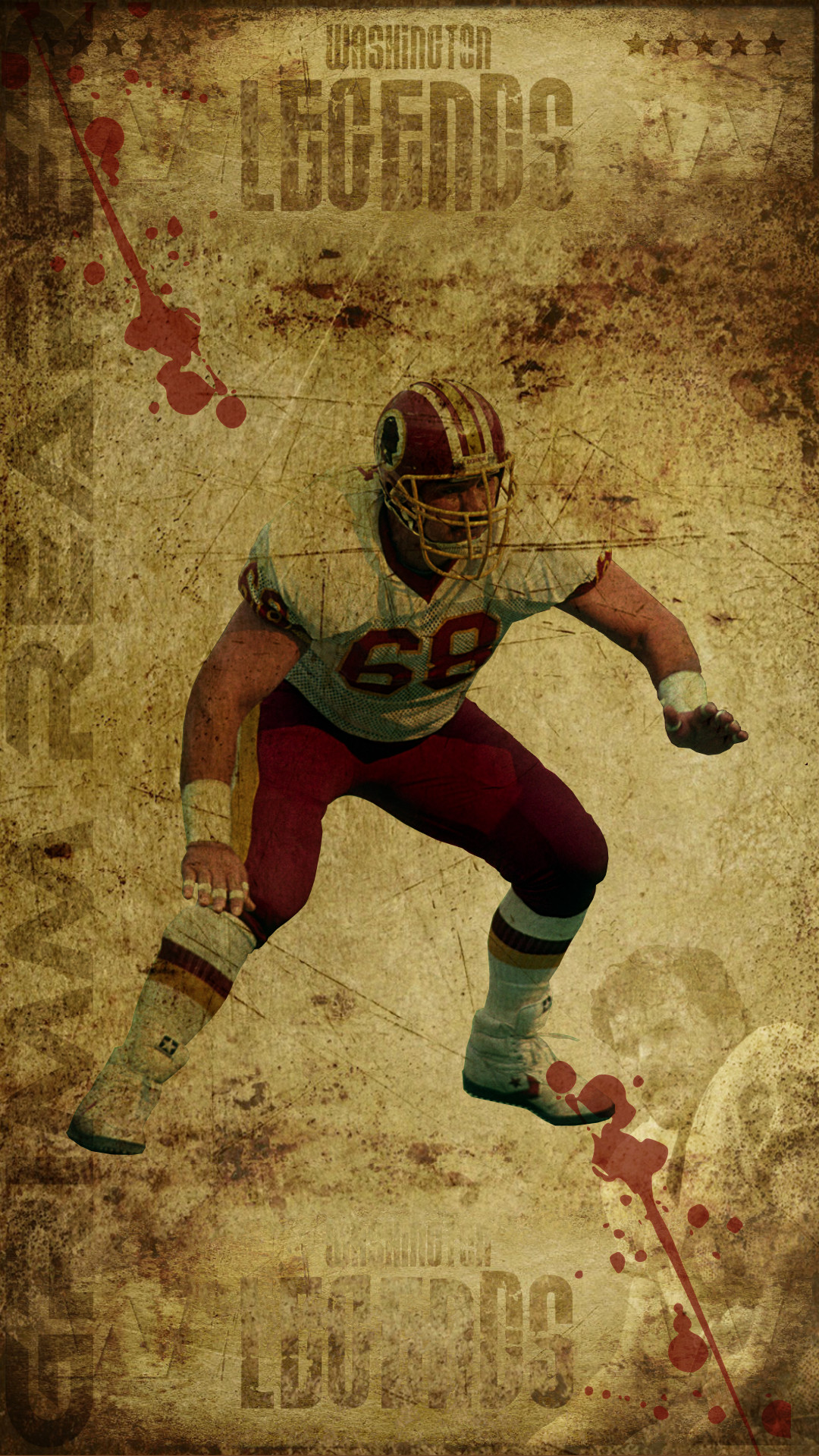
- Russ Grimm
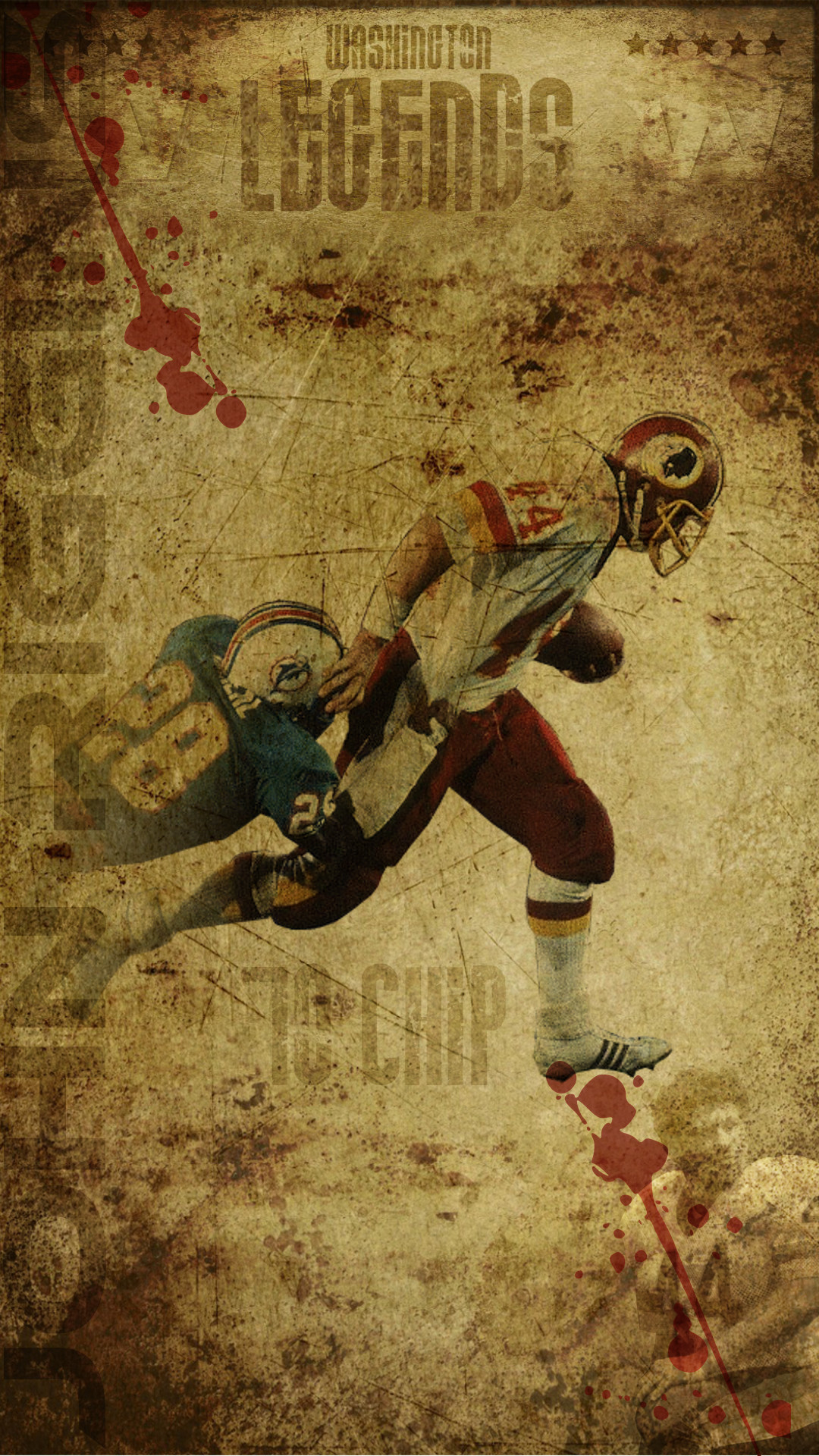
- John Riggins
- Joe Jacoby